
Zachary W. Binder, UMass Chan Medical School
After a sharp uptick in flu cases in mid-December 2025, flu activity across the U.S. and Canada remains high.

Zachary W. Binder, UMass Chan Medical School
After a sharp uptick in flu cases in mid-December 2025, flu activity across the U.S. and Canada remains high.

Morgan Underwood, Rice University
When astronomers search for planets that could host liquid water on their surface, they start by looking at a star’s habitable zone. Water is a key ingredient for life, and on a planet too close to its star, water on its surface may “boil”; too far, and it could freeze. This zone marks the region in between.


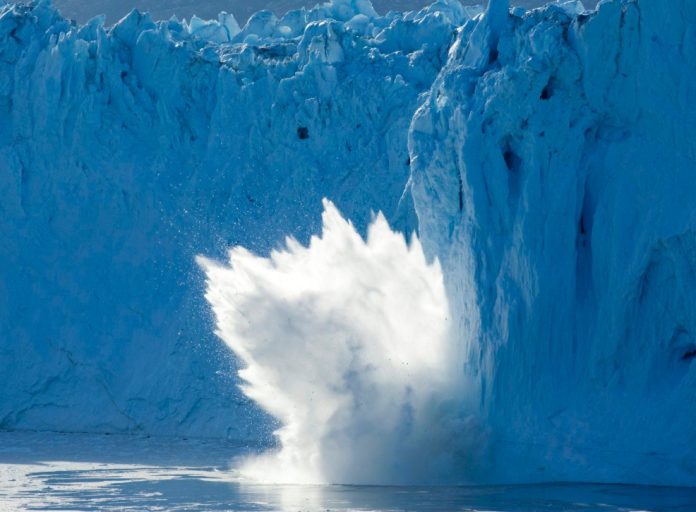
Each summer in the mountains above Juneau, Alaska, meltwater from the massive Mendenhall Glacier flows into mountain lakes and into the Mendenhall River, which runs through town.

Susan Yeargin, University of South Carolina
When summer starts with a stifling heat wave, as many places are seeing in 2025, it can pose risks for just about anyone who spends time outside, whether they’re runners, people who walk or cycle to work, outdoor workers or kids playing sports.
Susan Yeargin, an expert on heat-related illnesses, explains what everyone should think about before spending time outside in a heat wave and how to keep yourself and vulnerable family members and friends safe.

Christine Bryson, Anglia Ruskin University
Gum diseases are among the most common chronic human diseases, affecting between 20 to 50% of people worldwide. They happen when plaque, a sticky film of bacteria, builds up on teeth. The earliest stages of gum disease are treatable and reversible (gingivitis). But some people develop a chronic destructive form of gum disease, which is irreversible. This disease progresses to tooth loss. A growing body of evidence shows that gum disease can also make people more likely to develop other serious health conditions.

Yeimy J. Rivera, Smithsonian Institution; Michael L. Stevens, Smithsonian Institution, and Samuel Badman, Smithsonian Institution
Our Sun drives a constant outward flow of plasma, or ionized gas, called the solar wind, which envelops our solar system. Outside of Earth’s protective magnetosphere, the fastest solar wind rushes by at speeds of over 310 miles (500 kilometers) per second. But researchers haven’t been able to figure out how the wind gets enough energy to achieve that speed – until now.Our team of heliophysicists published a paper in August 2024 that points to a new source of energy propelling the solar wind.

Jaclyn Champagne, University of Arizona

Curious Kids is a series for children of all ages. If you have a question you’d like an expert to answer, send it to curiouskidsus@theconversation.com.
Why are there small and big black holes? Also, why are some black holes invisible and others have white outlines?
Sedra and Humaid, Abu Dhabi, United Arab Emirates
Black holes are dense astronomical objects with gravity so strong that nothing, not even light, can escape. Anything that crosses the boundary of a black hole’s gravitational influence, called the event horizon, will fall into the black hole. Inside this deep, dense pit, it is never to be seen again.

Kimberly Baker, Clemson University
With rising rates of obesity in the U.S. and increasing attention being paid to the health harms of processed foods, it’s clear that far more could be done to help consumers make healthy food choices.