
Home Blog Page 16

NASA, International Panel Provide a New Window on Rising Seas

Photo of flooded road and field
Rising seas will exacerbate problems that coastal communities are already dealing with, including high-tide, or “nuisance,” floods. Inundated roadways like this one in Virginia are among the consequences of such floods. Credits: Aileen Devlin, Virginia Sea Grant
License

Pat Brennan –  NASA

A new online visualization tool will enable anyone to see what sea levels will look like anywhere in the world in the decades to come.

NASA’s Sea Level Change Team has created a sea level projection tool that makes extensive data on future sea level rise from the Intergovernmental Panel on Climate Change (IPCC) easily accessible to the public – and to everyone with a stake in planning for the changes to come.

Ad Title
ARTICLE INLINE AD
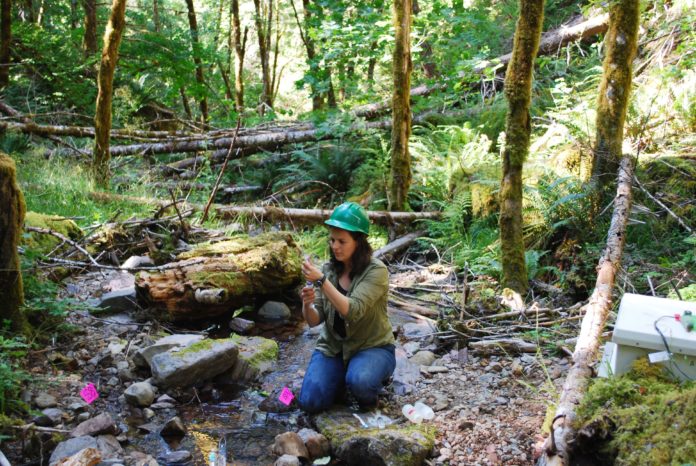
Climate change is already disrupting US forests and coasts

Photo of Scientist gathering samples in a forest
Scientists have been consistently documenting environmental changes at research sites like this one in the Cascade Mountains for decades. US Forest Service

Here’s what we’re seeing at 5 long-term research sites

Michael Paul Nelson, Oregon State University and Peter Mark Groffman, CUNY Graduate Center

Record-breaking heat waves and drought have left West Coast rivers lethally hot for salmon, literally cooked millions of mussels and clams in their shells and left forests primed to burn. The extraordinary severity of 2021’s heat and drought, and its fires and floods, has many people questioning whether climate change, fueled by human actions, is progressing even faster than studies have predicted and what that means for the future.

Ad Title
ARTICLE INLINE AD

Scientists’ most powerful technologies have been borrowed from nature

photo of a jellyfish floating in water
Crystal jellyfish contain glowing proteins that scientists repurpose for an endless array of studies. Weili Li/Moment via Getty Images

From CRISPR to glowing proteins to optogenetics – scientists’ most powerful technologies have been borrowed from nature

Marc Zimmer, Connecticut College

Watson and Crick, Schrödinger and Einstein all made theoretical breakthroughs that have changed the world’s understanding of science.

Today big, game-changing ideas are less common. New and improved techniques are the driving force behind modern scientific research and discoveries. They allow scientists – including chemists like me – to do our experiments faster than before, and they shine light on areas of science hidden from our predecessors.

Ad Title
ARTICLE INLINE AD

Brown seaweed piling up on Florida and Caribbean beaches

Photo of sargassum - brown seaweed
Mats of Sargassum seaweed off the coast of St. Martin in April 2018. ELY Michel CC BY-SA 4.0, , CC BY-SA

What’s driving the huge blooms of brown seaweed piling up on Florida and Caribbean beaches?

Stephen P. Leatherman, Florida International University

Here’s a handy geography question for your next trivia match: What is the world’s only sea that doesn’t have a land border?

The answer is the Sargasso Sea – a 2-million-square-nautical-mile haven of biodiversity that lies east of Bermuda in the Atlantic Ocean. Rather than beaches, it’s bounded by rotating ocean currents that form the North Atlantic Subtropical Gyre.

Ad Title
ARTICLE INLINE AD

Serious complications arise from youth-onset type 2 diabetes

Photo of child watching television
Image by Teresalunt from Pixabay

Serious complications from youth-onset type 2 diabetes arise by young adulthood

US National Institutes of Health

People with type 2 diabetes diagnosed during youth have a high risk of developing complications at early ages and have a greater chance of multiple complications within 15 years after diagnosis. The findings are the culmination of a first-of-its-kind trial funded largely by the National Institute of Diabetes and Digestive and Kidney Diseases (NIDDK), part of the National Institutes of Health.

Ad Title
ARTICLE INLINE AD

Understanding how diabetes weakens bones

Photo of a leg in a plaster cast
Poor bone health is on the list of problems associated with diabetes. Nngkhray Kracang Chay / EyeEm via Getty Images

Diabetics break bones easily – new research is figuring out why their bones are so fragile

Lamya Karim, University of Massachusetts Dartmouth

A person with Type 2 diabetes is three times more likely to break a bone than a nondiabetic. Since the number of people with diabetes is increasing rapidly in the United States, skeletal fragility in patients with Type 2 diabetes is a growing, but little-known, public health issue.

Ad Title
ARTICLE INLINE AD

Sitting and diabetes in older adults: Does timing matter?

Photo of a woman sitting at a desk
Sitting can do more than give you a headache. It is linked to diabetes and obesity. Stockfour/Shutterstock.com

John Bellettiere, University of California San Diego; Andrea LaCroix, University of California San Diego, and Matthew Mclaughlin, University of Newcastle

Adults are sitting more than ever, and few pay attention to how they sit throughout the day.

Ad Title
ARTICLE INLINE AD

Gestational Diabetes and Pregnancy

Pregnant woman in kitchen
Photo credit CDC.Gov
US Centers for Disease Control and Prevention

Gestational diabetes is a type of diabetes that is first seen in a pregnant woman who did not have diabetes before she was pregnant. Some women have more than one pregnancy affected by gestational diabetes. Gestational diabetes usually shows up in the middle of pregnancy. Doctors most often test for it between 24 and 28 weeks of pregnancy.

Ad Title
ARTICLE INLINE AD

Male fertility is declining

drawing
For decades, sperm counts and sperm health have been declining. Carol Yepes/Moment via Getty Images

– studies show that environmental toxins could be a reason

Ryan P. Smith, University of Virginia

In the U.S., nearly 1 in 8 couples struggles with infertility. Unfortunately, physicians like me who specialize in reproductive medicine are unable to determine the cause of male infertility around 30% to 50% of the time. There is almost nothing more disheartening than telling a couple “I don’t know” or “There’s nothing I can do to help.”

Ad Title
ARTICLE INLINE AD

Diabetes Diet, Eating, & Physical Activity

National Institutes of Health

Nutrition and physical activity are important parts of a healthy lifestyle when you have diabetes. Along with other benefits, following a healthy meal plan and being active can help you keep your blood glucose level, also called blood sugar, in your target range. To manage your blood glucose, you need to balance what you eat and drink with physical activity and diabetes medicine, if you take any. What you choose to eat, how much you eat, and when you eat are all important in keeping your blood glucose level in the range that your health care team recommends.

Ad Title
ARTICLE INLINE AD

Ad Box1

Custom Ad 1
Cutsom Ad 1 Ad