Home Blog Page 27

Microalgae – the next super food?

CSIRO

More protein and good for the planet: 9 reasons we should be eating microalgae

Martina Doblin, University of Technology Sydney; Donna Sutherland, University of Technology Sydney, and Peter Ralph, University of Technology Sydney

As the climate warms, the land we use for growing energy-intensive crops such as wheat and corn is becoming less productive. We need to find ways to feed the earth’s growing population that isn’t so burdensome on the environment.

Ad Title
ARTICLE INLINE AD

Compost programs turn garbage into ‘black gold’

Photo of pile of compost material
Mountainous piles of compost await distribution at the Las Virgenes Municipal Water District's Rancho Las Virgenes compost facility Thursday May 31 2001. DIGITAL IMAGE (Photo by Brian Vander Brug/Los Angeles Times via Getty Images)

City compost programs turn garbage into ‘black gold’ that boosts food security and social justice

Kristen DeAngelis, University of Massachusetts Amherst; Gwynne Mhuireach, University of Oregon, and Sue Ishaq, University of Maine

Almost overnight, the COVID-19 pandemic has transformed many Americans’ relationships with food. To relieve some of the stress associated with shopping safely for groceries and ensure food security, many people are once again planting “victory gardens.” This tradition hearkens back to previous generations who cultivated home gardens during both World Wars.

Ad Title
ARTICLE INLINE AD

Climate change brings multiple threats to crops

Photo of bug eating plant
In the heat, tomato plants can’t fight off the hungry tobacco hornworm, Manduca sexta. From www.shutterstock.com

Crops could face double trouble from insects and a warming climate

Gregg Howe, Michigan State University and Nathan Havko, Michigan State University

For millennia, insects and the plants they feed on have been engaged in a co-evolutionary battle: to eat or not be eaten. Until recently, the two antagonistic sides have maintained a stalemate of sorts. With climate change, however, warmer temperatures could tip the balance in favor of the insects and spell danger for crops and the farmers that tend to them.

Ad Title
ARTICLE INLINE AD

Sugar is making us sick

Photo of spoonful of sugar
Don’t add sugar. Sugar bowl via www.shutterstock.com

Sugar isn’t just empty, fattening calories — it’s making us sick

Robert Lustig, University of California, San Francisco

Children are manifesting increased rates of adult diseases like hypertension or high triglycerides. And they are getting diseases that used to be unheard of in children, like Type 2 diabetes and fatty liver disease. So why is this happening?

Ad Title
ARTICLE INLINE AD

Offshore drilling is still unsafe

Satellite photo of Gulf oil spill
A satellite image of the oil slick as it looked in late May 2010, a month after the Deepwater Horizon well exploded. The oil plume looks grayish white. NASA/Goddard/Jen Shoemaker and Stu Snodgrass

A decade after the Deepwater Horizon explosion, offshore drilling is still unsafe

Donald Boesch, University of Maryland Center for Environmental Science

Ten years ago, on April 20, 2010, the BP Deepwater Horizon oil rig exploded, killing 11 crew members and starting the largest ocean oil spill in history. Over the next three months, between 4 million and 5 million barrels of oil spewed into the Gulf of Mexico.

Ad Title
ARTICLE INLINE AD

Super computers and the race to defeat a pandemic

It takes a tremendous amount of computing power to simulate all the components and behaviors of viruses and cells.Thomas Splettstoesser scistyle.com, CC BY-ND

Scientists tap the world’s most powerful computers in the race to understand and stop the coronavirus

Jeremy Smith, University of Tennessee

In “The Hitchhiker’s Guide to the Galaxy” by Douglas Adams, the haughty supercomputer Deep Thought is asked whether he can find the answer to the ultimate question concerning life, the universe and everything. He replies that, yes, he can do it, but it’s tricky and he’ll have to think about it. When asked how long it will take him he replies, “Seven-and-a-half million years. I told you I’d have to think about it.”

Ad Title
ARTICLE INLINE AD

Antibody injections could fight COVID-19 infections

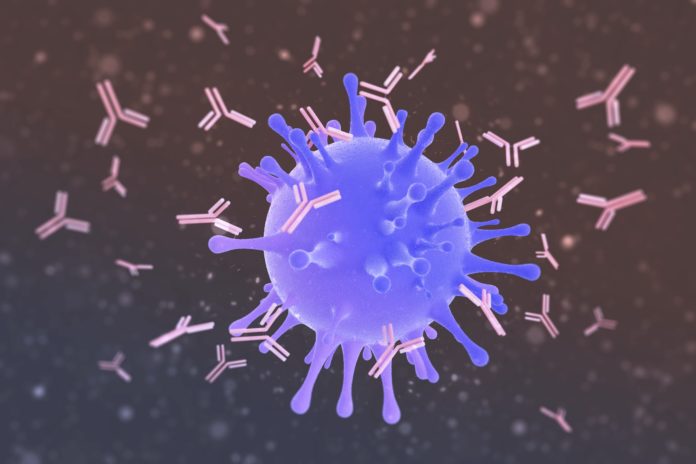
Antibodies attacking virus, illustration
Antibodies (pink) attacking a virus particle (blue). STEVEN MCDOWELL/SCIENCE PHOTO LIBRARY

An infectious disease expert explains how antibody injections could fight COVID-19 infections

Dimiter Stanchev Dimitrov, University of Pittsburgh

Antibodies are part of us – literally.

We have billions of them in our bodies with a combined weight of about 100 grams, or about the weight of a bar of soap. If there are so many antibodies inside our bodies then they must be safe and very important, right?

Ad Title
ARTICLE INLINE AD

Gold rush, mercury legacy

Artisanal small-scale gold mining polluted this stream and deforested sections of the Madre de Dios area of Peru. Mario Tama/Getty Images

Small-scale mining for gold has produced long-lasting toxic pollution, from 1860s California to modern Peru

Jacqueline Gerson, Duke University; Austin Wadle, Duke University, and Jasmine Parham, Duke University

Gold is everywhere in modern life, from jewelry to electronics to smartphones. The global electronics industry alone uses 280 tons annually. And that demand keeps growing.

But most people know little about the environmental impacts of gold mining. About 15% of world gold production is from artisanal and small-scale mining in over 70 countries throughout Asia, Africa and South America. These operations employ 10 to 19 million workers. They often are poorly policed and weakly regulated.

Ad Title
ARTICLE INLINE AD

Coronavirus – work continues to test existing drugs

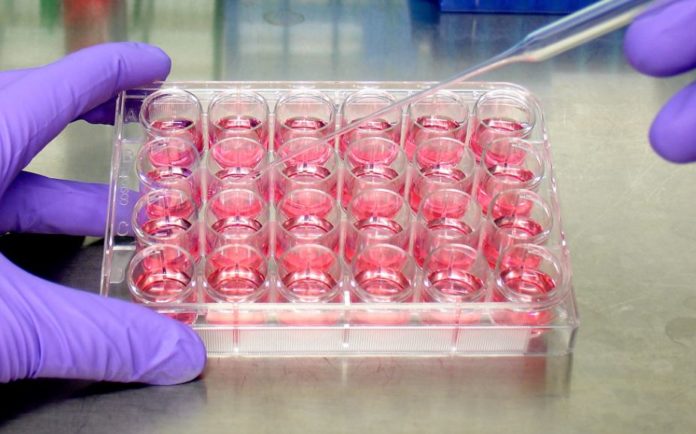
We found and tested 47 old drugs that might treat the coronavirus: Results show promising leads and a whole new way to fight COVID-19

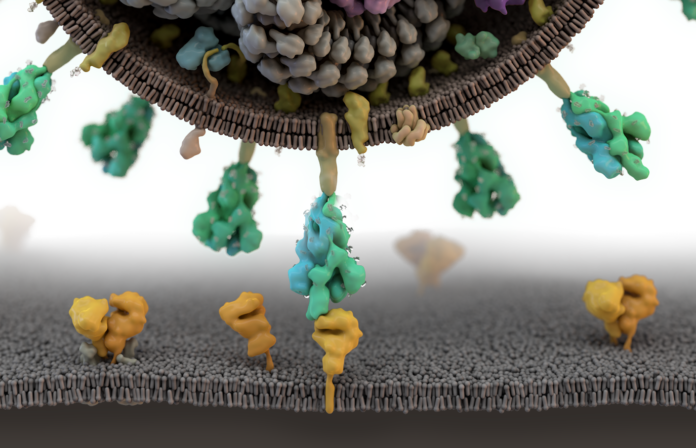
The more researchers know about how the coronavirus attaches, invades and hijacks human cells, the more effective the search for drugs to fight it. That was the idea my colleagues and I hoped to be true when we began building a map of the coronavirus two months ago. The map shows all of the coronavirus proteins and all of the proteins found in the human body that those viral proteins could interact with.

Ad Title
ARTICLE INLINE AD

Fish livers found to contain oil from Deepwater Horizon blowout

Researchers use Atlantic mackerel for bait on long-lining fishing sampling expeditions in the Gulf of Mexico.. C-IMAGE Consortium, CC BY-ND

Scientists have found oil from the Deepwater Horizon blowout in fishes’ livers and on the deep ocean floor

Over the decade since the Deepwater Horizon spill, thousands of scientists have analyzed its impact on the Gulf of Mexico. The spill affected many different parts of the Gulf, from coastal marshes to the deep sea.

Ad Title
ARTICLE INLINE AD

Ad Box1

Custom Ad 1
Cutsom Ad 1 Ad