Home Blog Page 31

Multiple methods for removing CO2 from the the atmosphere will be required

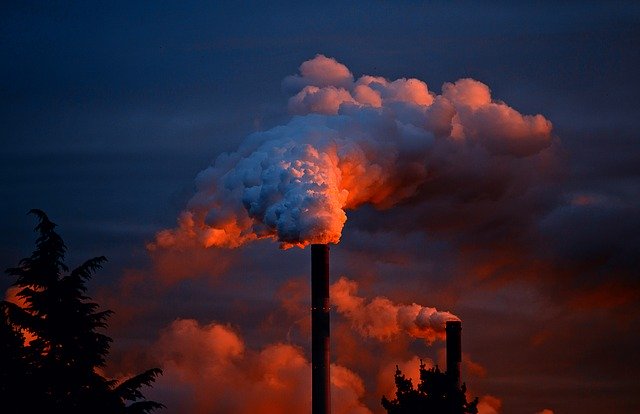
Photo of smoke stack pollution
Image by JuergenPM from Pixabay

David Goldberg, Columbia University

Concentrations of carbon dioxide in the atmosphere are higher than at any time in human history, and nine of the warmest years have occurred since 2005.

Even with the progress made in introducing alternatives to fossil fuels, gaining energy efficiencies and proposed carbon regulations around the world, avoiding catastrophic impacts on our coastal infrastructure, biodiversity, food, energy and water resources will require more. In particular, many climate researchers like myself believe government needs to advance technology that will actually suck carbon dioxide out of the air and put it away for very long periods.

Ad Title
ARTICLE INLINE AD

NASA’s Mars 2020 Rover Completes Its First Drive

In a clean room at NASA's Jet Propulsion Laboratory in Pasadena, California, engineers observed the first driving test for NASA's Mars 2020 rover on Dec. 17, 2019. Credit: NASA/JPL-Caltech

Republished from article on JPL.NASA.gov

NASA’s next Mars rover has passed its first driving test. A preliminary assessment of its activities on Dec. 17, 2019, found that the rover checked all the necessary boxes as it rolled forward and backward and pirouetted in a clean room at NASA’s Jet Propulsion Laboratory in Pasadena, California. The next time the Mars 2020 rover drives, it will be rolling over Martian soil.

Ad Title
ARTICLE INLINE AD

Growing evidence links Vitamin E to vaping injuries

Cosby Stone, Vanderbilt University

The Centers for Disease Control and Prevention recently announced a preliminary finding that implicates a vitamin E additive as the potential cause of lung injury from THC vaping.

The agency examined fluid samples from the lungs of 29 patients with vaping-related illness and found vitamin E acetate in all 29 samples. This is a major development in the search for answers, and it was of great interest to me generally as a public health researcher.

Ad Title
ARTICLE INLINE AD

Aquatic Rover Goes for a Drive Under the Ice

Photo of two wheeled autonomous rover
BRUIE will spend the next month testing its endurance in the icy waters near Casey Station, Antarctica. The rover uses its buoyancy to anchor itself to the ice and roll along it upside down on two wheels. Credit jpl.nasa.gov

Republished from an article originally published on jpl.nasa.gov
A little robotic explorer will be rolling into Antarctica this month to perform a gymnastic feat – driving upside down under sea ice.

BRUIE, or the Buoyant Rover for Under-Ice Exploration, is being developed for underwater exploration in extraterrestrial, icy waters by engineers at NASA’s Jet Propulsion Laboratory in Pasadena, California. It will spend the next month testing its endurance at Australia’s Casey research station in Antarctica, in preparation for a mission that could one day search for life in ocean worlds beyond Earth.

Ad Title
ARTICLE INLINE AD

How does a piece of bread cause a migraine?

Photo of man with headache
Image by Istvan Brecz-Gruber from Pixabay

Lauren Green, University of Southern California

Migraine is the third most prevalent illness in the world and causes suffering for tens of millions of people. In fact, nearly 1 in 4 U.S. household includes someone with migraines.

Migraine is not just a headache but also includes a collection of associated symptoms that can be debilitating. These include nausea, vomiting, light sensitivity and dizziness. Often people struggle to determine what triggers their migraines. It can be environmental, hormonal, genetic, secondary to an underlying illness, or triggered by certain foods, such as cheese, red wine or chocolate. One food that has received a lot of attention in recent years is gluten – a protein found in wheat, rye and barley.

Ad Title
ARTICLE INLINE AD

Shrinking of Antarctic ice shelves is accelerating

Photo of arctic ice shelf and surrounding ocean
Antarctica’s Brunt Ice Shelf photographed in October 2011 from NASA’s DC-8 research aircraft during an Operation IceBridge flight. Michael Studinger/NASA, Author provided

Laurence Padman, Earth and Space Research; Fernando Paolo, University of California San Diego, and Helen Amanda Fricker, University of California San Diego

Ask people what they know about Antarctica and they usually mention cold, snow and ice. In fact, there’s so much ice on Antarctica that if it all melted into the ocean, average sea level around the entire world would rise about 200 feet, roughly the height of a 20-story building.

Could this happen? There’s evidence that at various times in the past there was much less ice on Antarctica than there is today. For example, during an extended warm period called the Eemian interglacial about 100,000 years ago, Antarctica probably lost enough ice to raise sea level by several meters.

Ad Title
ARTICLE INLINE AD

Rural Americans struggle for health care access

Photo of surgeons working
Image by skeeze from Pixabay

Simon F. Haeder, Pennsylvania State University

Living in rural America certainly comes with a number of benefits. There is less crime, access to the outdoors, and lower costs of living.

Yet, not everything is rosy outside the city limits. Rural communities face growing infrastructure problems like decaying water systems. And they have more limited access to amenities ranging from grocery stores to movie theaters, lower quality schools, and less access to high-speed internet.

Ad Title
ARTICLE INLINE AD

Why are whales big, but not bigger?

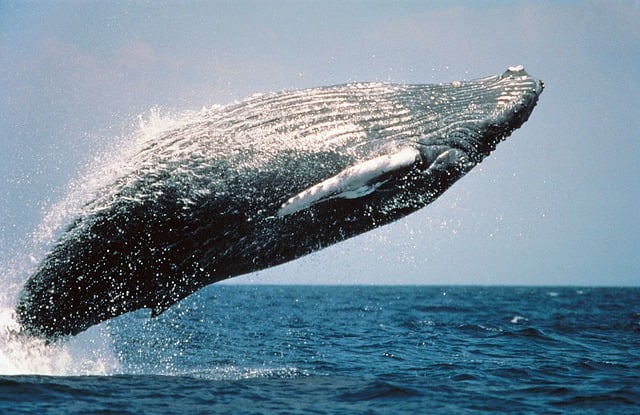
Photo of whale jumping out of the water
Image by skeeze from Pixabay

Matthew Savoca, Stanford University; Jeremy Goldbogen, Stanford University, and Nicholas Pyenson, Smithsonian Institution

Both toothed and baleen (filter-feeding) whales are among the largest animals ever to exist. Blue whales, which measure up to 100 feet (30 meters) long and can weigh over 150 tons, are the largest animals in the history of life on Earth.

Although whales have existed on this planet for some 50 million years, they only evolved to be truly gigantic in the past five million years or so. Researchers have little idea what limits their enormous size. What is the pace of life at this scale, and what are the consequences of being so big?

Ad Title
ARTICLE INLINE AD

Why your generic drugs may not be safe and the FDA may be too lax

Photograph of capsules
Generic drugs can be a great way to save money, but a recent study shows there are risks involved. HQuality/Shutterstock.com

C. Michael White, University of Connecticut

Generic prescription drugs have saved the U.S. about US$1.7 trillion over the past decade. The Food and Drug Administration approved a record 781 new generics in 2018 alone, including generic versions of Cialis, Levitra and Lyrica. They join generic versions of blockbusters from yesteryear, like Lipitor, Nexium, Prozac and Xanax.

Seniors are the biggest purchasers of generics, because they take the most medications and are on fixed incomes, but virtually everyone has taken a generic antibiotic or pain pill at one time.

Ad Title
ARTICLE INLINE AD

Why it can be hard to stop eating even when you’re full: Some foods may be designed that way

Photograph of cookies
Bet you can’t eat just one. tlindsayg/Shutterstock

Tera Fazzino, University of Kansas and Kaitlyn Rohde, University of Kansas

All foods are not created equal. Most are palatable, or tasty to eat, which is helpful because we need to eat to survive. For example, a fresh apple is palatable to most people and provides vital nutrients and calories.

But certain foods, such as pizza, potato chips and chocolate chip cookies, are almost irresistible. They’re always in demand at parties, and they’re easy to keep eating, even when we are full.

Ad Title
ARTICLE INLINE AD

Ad Box1

Custom Ad 1
Cutsom Ad 1 Ad