Home Blog Page 33

Your big brain makes you human

Image by kalhh from Pixabay

Suzana Herculano-Houzel, Vanderbilt University

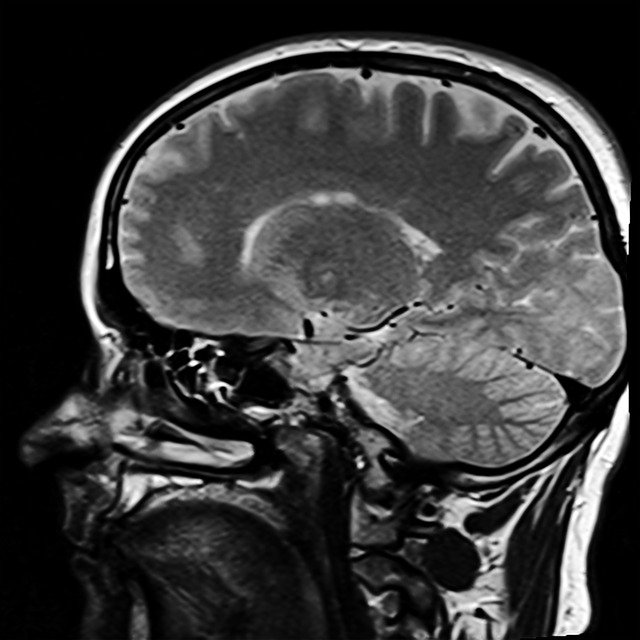
Here’s something new to consider being thankful for at the dinner table: the long evolutionary journey that gave you your big brain and your long life. Your big brain makes you human – count your neurons when you count your blessings.

Courtesy of our primate ancestors that invented cooking over a million years ago, you are a member of the one species able to afford so many cortical neurons in its brain. With them come the extended childhood and the pushing century-long lifespan that together make human beings unique.

All these bequests of your bigger brain cortex mean you can gather four generations around a meal to exchange banter and gossip, turn information into knowledge and even practice the art of what-not-to-say-when.

Ad Title
ARTICLE INLINE AD

Having a Closer Look at Cancer Alley

Image by James Glen from Pixabay

Health Officials in “Cancer Alley” Will Study if Living Near a Controversial Chemical Plant Causes Cancer

ProPublica is a Pulitzer Prize-winning investigative newsroom. Sign up for The Big Story newsletter to receive stories like this one in your inbox.

Louisiana health officials plan to knock on every door within 2.5 kilometers of the controversial Denka Performance Elastomer plant in St. John the Baptist Parish in hopes of determining exactly how many people in the neighborhood have developed cancer.

Neighbors say the inquiry, first announced in late August, is long overdue.

The Denka plant is the only one in the country that emits chloroprene, which was classified as a likely carcinogen by the U.S. Environmental Protection Agency in 2010. The plant is in the heart of Louisiana’s industrial corridor, which already has some of the most toxic air pollution in the nation, and where a wave of new petrochemical plants is expected to worsen air quality in already overburdened areas, according to an analysis by ProPublica and The Times-Picayune and The Advocate.

Ad Title
ARTICLE INLINE AD

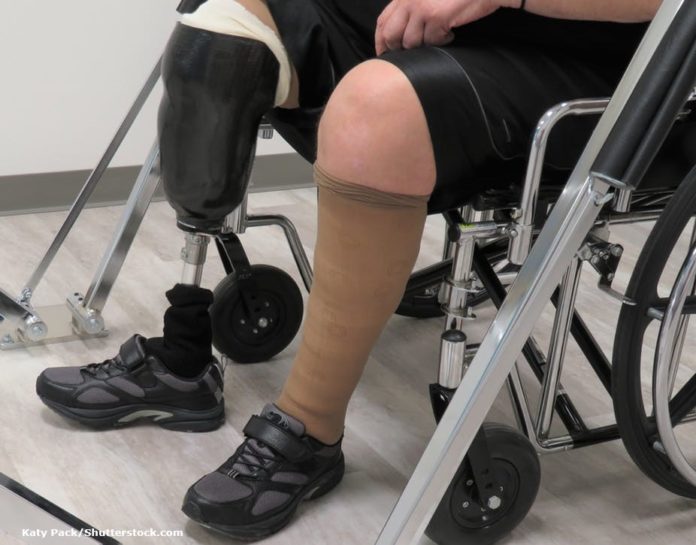
Diabetic foot wounds kill millions, but high-tech solutions and teamwork are making a difference

Photo of diabetic amputee
Katy Pack/Shutterstock.com

David G. Armstrong, University of Southern California

What if someone told you that there’s a disease you could catch where you couldn’t feel any symptoms coming on? And that this occurs every 1.2 seconds somewhere in the world?

Ad Title
ARTICLE INLINE AD

How the US census kickstarted America’s computing industry

David Lindsay Roberts, Prince George’s Community College

The U.S. Constitution requires that a population count be conducted at the beginning of every decade. This census has always been charged with political significance, and continues to be. That’s clear from the controversy over the conduct of the upcoming 2020 census.

But it’s less widely known how important the census has been in developing the U.S. computer industry, a story that I tell in my new book, “Republic of Numbers: Unexpected Stories of Mathematical Americans through History.”

Ad Title
ARTICLE INLINE AD

Better batteries are fueling a surge of electric scooters in India and China

Scooters and motorcycles are widely used in developing countries and are better suited to electrification than sedans.
AP Photo/Mahesh Kumar A.

Venkat Viswanathan, Carnegie Mellon University and Shashank Sripad, Carnegie Mellon University

When it comes to electric cars, 2019 has been a big year. Tesla ramped up production of its Model 3 sedan, Audi launched its e-Tron all-electric SUV, Porsche unveiled the Taycan sports car, and perhaps the most significant of all, Daimler announced that it has no plans to develop next-generation combustion engines, but instead will focus on electrification.

Cars dominate personal transportation in developed countries, but in the developing world, two-wheelers – motorcycles and motor scooters – account for the majority of vehicles on the road. China and India are the two largest markets for two-wheelers, which contribute to their air pollution problems. About 20% of the CO₂ emissions and 30% of particulate emissions in India are due to two-wheelers.

Ad Title
ARTICLE INLINE AD

How the electric power system we take for granted came to be

Buildings at the 1893 World’s Columbian Exposition in Chicago, illuminated by George Westinghouse’s alternating current.
Field Museum Library/Wikipedia, CC BY

Jay Apt, Carnegie Mellon University

Many experts view the electric power grid as the greatest engineering achievement of the 20th century. But if Thomas Edison, inventor of the first commercial power plant, had had his way, the modern grid would not have been built. Instead the U.S. would have been powered by numerous coal-burning power plants, spaced a mile or so apart, with no electricity at all in rural areas.

Another electricity pioneer, engineer and inventor George Westinghouse, was convinced that Edison’s system wouldn’t scale, to use a modern term. When Westinghouse heard of a technology that would allow electricity to be sent over long distances with only small losses, he jumped into the electric power business.

Ad Title
ARTICLE INLINE AD

Brain activity predicts which mice will become compulsive drinkers

Image by Tibor Janosi Mozes from Pixabay

Cody A. Siciliano, Vanderbilt University

Some individuals consume alcohol their entire adult life without developing an alcohol use disorder. Others, however, quickly transition to compulsive and problematic drinking. Can we determine what makes some people vulnerable to addiction?

Alcohol drinking is the third leading cause of preventable death in the United States, and is responsible for millions of deaths per year worldwide. If the reasons why some people are susceptible to alcohol use disorder were known, it might be possible to more effectively treat this devastating disease, or even intervene before serious problems emerge.

Ad Title
ARTICLE INLINE AD

Rainforest Loss Means Loss of Undiscovered Medicines

Dwindling tropical rainforests mean lost medicines yet to be discovered in their plants

Walter Suza, Iowa State University

Growing up in Tanzania, I knew that fruit trees were useful. Climbing a mango tree to pick a fruit was a common thing to do when I was hungry, even though at times there were unintended consequences. My failure to resist consuming unripened fruit, for example, caused my stomach to hurt. With such incidents becoming frequent, it was helpful to learn from my mother that consuming the leaves of a particular plant helped alleviate my stomach pain.

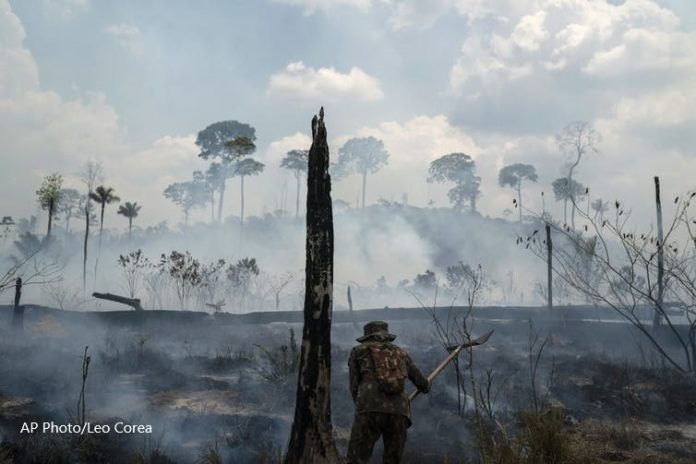
This lesson helped me appreciate the medicinal value of plants. However, I also witnessed my family and neighboring farmers clearing the land by slashing and burning unwanted trees and shrubs, seemingly unaware of their medicinal value, to create space for food crops.

Ad Title
ARTICLE INLINE AD

Why the CDC warns antibiotic-resistant fungal infections are an urgent health threat

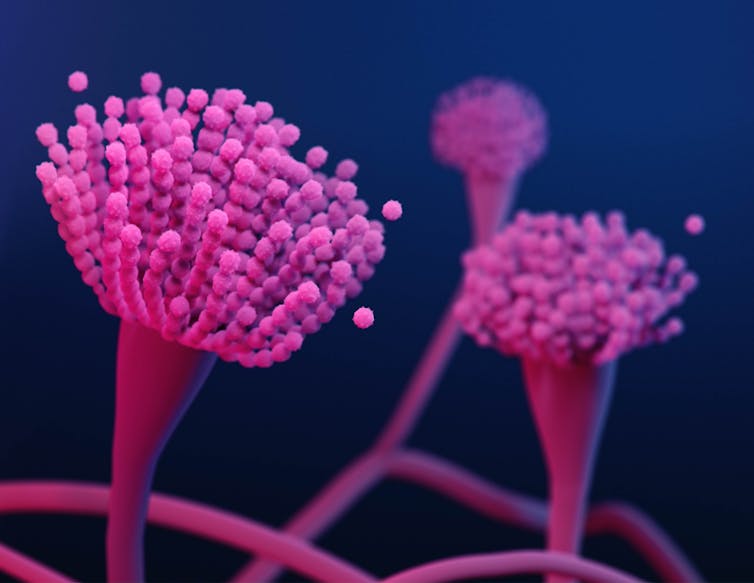
This is a medical illustration of an drug-resistant fungus, Aspergillus fumigatus.
Stephanie Rossow/CDC

Cornelius (Neil) J. Clancy, University of Pittsburgh

In 2013 I took care of a gentleman who underwent surgery for what all his physicians, including me, thought was liver cancer. Surgery revealed that the disease was a rare but benign tumor, rather than cancer. As you might imagine, he and his family were overjoyed and relieved.

However, two weeks after this surgery, he developed a liver abscess – an encapsulated tissue infection. Surgeons operated to remove the abscess. Two days later, test results revealed that the abscess was caused by a fungus called Candida that was resistant to echinocandins, our most powerful drugs against this fungus.

Ad Title
ARTICLE INLINE AD

How gene-edited white blood cells are helping fight cancer

Scientists are using gene editing to make better cancer treatments.
Piyush K. Jain, University of Florida

For the first time in the United States, a gene editing tool has been used to treat advanced cancer in three patients and showed promising early results in a pilot phase 1 clinical trial. So far the treatment appears safe, and more results are expected soon.

To develop a safer and more effective treatment for cancer patients, scientists from the University of Pennsylvania, the Parker Institute for Cancer Immunotherapy in San Francisco and Tmunity Therapeutics, a biotech company in Philadelphia, developed an advanced version of immunotherapy. In this treatment, a patient’s own immune cells are removed from the body, trained to recognize specific cancer cells and then finally injected back into the patient where they multiply and destroy them.

Ad Title
ARTICLE INLINE AD

Ad Box1

Custom Ad 1
Cutsom Ad 1 Ad