Home Blog Page 10

How poisonous mercury gets from coal-fired power plants into the fish you eat

Photo of man fishing near coal-fired power plant
NEWBURG, MD - JUNE 29: Danielle Gross casts his fishing line into the Potomac River as emissions spew out of a large stack nearby at the coal-fired Morgantown Generating Station June 29, 2015 in Newburg, Maryland. Today the U.S. Supreme Court ruled against the Environmental Protection Agency's (EPA) effort to limit certain power plant emissions -- saying the agency "unreasonably" failed to consider the cost of the regulations. (Photo by Mark Wilson/Getty Images)

How poisonous mercury gets from coal-fired power plants into the fish you eat

Gabriel Filippelli, IUPUI

People fishing along the banks of the White River as it winds through Indianapolis sometimes pass by ominous signs warning about eating the fish they catch.

One of the risks they have faced is mercury poisoning.

Ad Title
ARTICLE INLINE AD

Poverty reduction alters infant brain activity

Photo of woman with baby
The study adds to growing evidence that interventions to relieve poverty can affect how infants’ brains develop. Juliya Shangarey / Shutterstock

Brian Doctrow, Ph.D. – U.S. National Institutes of Health

At a Glance

  • Cash transfers to low-income mothers led to changes in their infants’ brain activity.
  • The results suggest that interventions to relieve poverty can affect how infants’ brains develop.
Poverty in early childhood correlates with lower school achievement and reduced earnings as an adult. It is also associated with differences in brain structure and electrical brain activity. Brain activity exhibits repetitive patterns at various frequencies. More low-frequency activity has been associated with behavioral, attention, and learning problems. Higher-frequency activity has been associated with better language, cognitive, and social-emotional scores.
Ad Title
ARTICLE INLINE AD

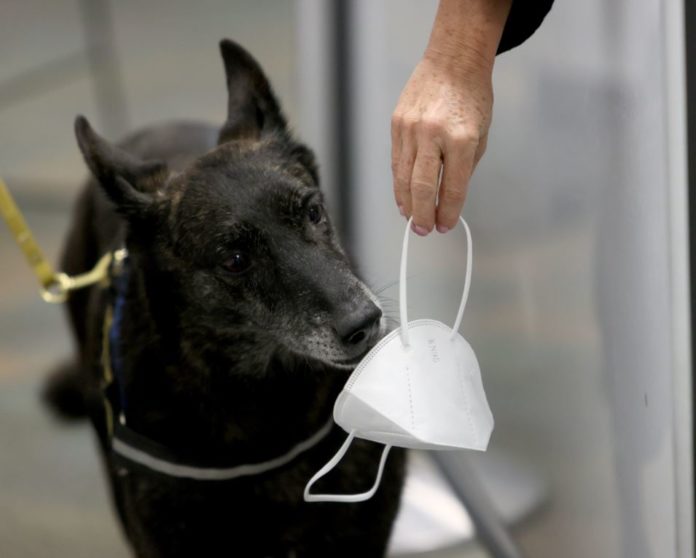
Dogs can be trained to sniff out COVID-19

Photo of Dog sniffing a face mask
Researchers at Florida International University successfully trained One Betta, a Dutch Shepard, and three other dogs to detect COVID-19 on face masks. The dogs got it right 96% to 99% of the time. Joe Raedle/Staff/Getty Images North America

A team of forensic researchers explain the science of training and learning from the amazing power of the canine nose

Kenneth G. Furton, Florida International University; Julian Mendel, Florida International University, and Kelvin J. Frank Jr., Florida International University

With up to 300 million scent receptors, dogs are among the best smell detectors in the animal world. The human nose, by comparison, contains only around 6 million scent receptors. Dog brains also devote 40% more brain space than humans to analyzing odors.

Ad Title
ARTICLE INLINE AD

CDC Reports Increase in Human Rabies Cases Linked to Bats in the U.S.

Photo of a bat sitting on the ground with its fangs shown
Image by Mohan Nannapaneni from Pixabay

Three U.S. rabies deaths in just five weeks

US Centers for Disease Control and Prevention (CDC)

CDC is raising awareness of the risks of rabies from bats in the U.S. after three people, including one child, died from rabies between late September and early November 2021. The three cases, described in the January 6, 2022, Morbidity and Mortality Weekly Report, bring the total number of cases in 2021 to five, compared to no reported rabies cases in people during 2019 and 2020.

Ad Title
ARTICLE INLINE AD

Some cancers are preventable with a vaccine – a virologist explains

Artist drawing of cancer cells
Some strains of the human papilloma virus (HPV) have been associated with cancers, especially cervical cancer. Kateryna Kon/Science Photo Library via Getty Images

Ronald C. Desrosiers, University of Miami

One-fifth. Nearly 20% of cancers worldwide are caused by a virus.

These viruses don’t cause cancer until long after they initially infect a person. Rather, the viruses teach the cells they take over how to escape the natural biological process of cell death. This strategy sets these altered cells on a path for other genetic changes that can cause full-blown cancer years down the road.

Ad Title
ARTICLE INLINE AD

Artificial Intelligence identifies dead cells under the microscope 100 times faster than people can

Photo of a cell with enhanced by artificial intelligence
Eliminating human guesswork can make for faster and more accurate research. KTSDESIGN/Science Photo Library via Getty Images

New AI technique identifies dead cells under the microscope 100 times faster than people can – potentially accelerating research on neurodegenerative diseases like Alzheimer’s

Jeremy Linsley, University of California, San Francisco

Understanding when and why a cell dies is fundamental to the study of human development, disease and aging. For neurodegenerative diseases such as Lou Gehrig’s disease, Alzheimer’s and Parkinson’s, identifying dead and dying neurons is critical to developing and testing new treatments. But identifying dead cells can be tricky and has been a constant problem throughout my career as a neuroscientist.

Ad Title
ARTICLE INLINE AD

Ocean heat is at record levels, with major consequences

Photo of Child walking through flood waters carrying a bicycle
A tropical storm’s rain overwhelmed a dam in Thailand and caused widespread flooding in late September. It was just one of 2021’s disasters. Chaiwat Subprasom/SOPA Images/LightRocket via Getty Images

Kevin Trenberth, University of Auckland

The world witnessed record-breaking climate and weather disasters in 2021, from destructive flash floods that swept through mountain towns in Europe and inundated subway systems in China and the U.S., to heat waves and wildfires. Typhoon Rai killed over 400 people in the Philippines; Hurricane Ida caused an estimated US$74 billion in damage in the U.S.

Ad Title
ARTICLE INLINE AD

A new patent-free COVID-19 vaccine could be a game changer

Artist drawing of a map of the world with vaccines being given to thenations
CORBEVAX uses recombinant DNA technology that many countries already have the infrastructure to produce. Artis777 via iStock/Getty Images Plus

CORBEVAX, a new patent-free COVID-19 vaccine, could be a pandemic game changer globally

Maureen Ferran, Rochester Institute of Technology

The world now has a new COVID-19 vaccine in its arsenal, and at a fraction of the cost per dose.

Two years into the COVID-19 pandemic, the world has seen over 314 million infections and over 5.5 million deaths worldwide. Approximately 60% of the world population has received at least one dose of a COVID-19 vaccine. But there is still a glaring and alarming gap in global access to these vaccines. As a virologist who has followed this pandemic closely, I contend that this vaccine inequity should be of grave concern to everyone.

Ad Title
ARTICLE INLINE AD

Removing greenhouse gases from the air

Artist drawing of futuristic air scrubbers as tall metal cylinders
One ‘mechanical tree’ is about 1,000 times faster at removing carbon dioxide from air than a natural tree. The first is to start operating in Arizona in 2022. Illustration via Arizona State University

These machines scrub greenhouse gases from the air – an inventor of direct air capture technology shows how it works

Klaus Lackner, Arizona State University

Two centuries of burning fossil fuels has put more carbon dioxide, a powerful greenhouse gas, into the atmosphere than nature can remove. As that CO2 builds up, it traps excess heat near Earth’s surface, causing global warming. There is so much CO2 in the atmosphere now that most scenarios show ending emissions alone won’t be enough to stabilize the climate – humanity will also have to remove CO2 from the air.

Ad Title
ARTICLE INLINE AD

Myocarditis: COVID-19 is a much bigger risk to the heart than vaccination

Drawing of a human heart surrounded by coronavirus
Myocarditis is an inflammation of the heart muscle most commonly caused by a virus. (Shutterstock)

Glen Pyle, University of Guelph and Jennifer H Huang, Oregon Health & Science University

The heart has played a central role in COVID-19 since the beginning. Cardiovascular conditions are among the highest risk factors for hospitalization. A significant number of patients hospitalized with SARS-CoV-2 infections have signs of heart damage, and many recover from infection with lasting cardiovascular injury.

Ad Title
ARTICLE INLINE AD

Ad Box1

Custom Ad 1
Cutsom Ad 1 Ad