Home Blog Page 19

Water wells are at risk

Photo of trees
An orchard near Kettleman City in California’s San Joaquin Valley on April 2, 2021. Frederic J. Brown/AFP via Getty Images

Water wells are at risk of going dry in the US and worldwide

Debra Perrone, University of California Santa Barbara and Scott Jasechko, University of California Santa Barbara

As the drought outlook for the Western U.S. becomes increasingly bleak, attention is turning once again to groundwater – literally, water stored in the ground. It is Earth’s most widespread and reliable source of fresh water, but it’s not limitless.

Ad Title
ARTICLE INLINE AD

Researchers very concerned about covid variant P.1

Graphic drawing of mutating virus
Credit Donald Blisss \ NIH

Dr. Francis Collins
National Institutes of Health

By last October, about three out of every four residents of Manaus, Brazil already had been infected with SARS-CoV-2, the virus that causes COVID-19 [1]. And yet, despite hopes of achieving “herd immunity” in this city of 2.2 million in the Amazon region, the virus came roaring back in late 2020 and early 2021 to cause a second wave of illness and death [2]. How is this possible?

Ad Title
ARTICLE INLINE AD

Neurological damage common among covid long haulers

Photo of patient and doctor
COVID-19 survivors face not only physical symptoms. A large study recently showed that their mental health is affected, too. FG Trade/Getty Images

Prolonged brain dysfunction in COVID-19 survivors: A pandemic in its own right?

Chris Robinson, University of Florida

One in three survivors of COVID-19, those more commonly referred to as COVID-19 long-haulers, suffered from neurologic or psychiatric disability six months after infection, a recent landmark study of more than 200,000 post-COVID-19 patients showed.

Ad Title
ARTICLE INLINE AD

The Earth is getting much warmer

Photo of hazy sunset
Sunrise in Stone Harbor, New Jersey. Robert D. Barnes via Getty Images

Warming is clearly visible in new US ‘climate normal’ datasets

Russ Schumacher, Colorado State University and Becky Bolinger, Colorado State University

Anyone who listens to weather reports has heard meteorologists comment that yesterday’s temperature was 3 degrees above normal, or last month was much drier than normal. But what does “normal” mean in this context – and in a world in which the climate is changing?

The National Oceanic and Atmospheric Administration has released updated “climate normals” – datasets that the agency produces every 10 years to give forecasters and the public baseline measurements of average temperature, rainfall and other conditions across the U.S. As the state climatologist and assistant state climatologist for Colorado, we work with this information all the time. Here’s what climate normals are, how they’ve changed, and how you can best make sense of them.

Ad Title
ARTICLE INLINE AD

Coronavirus variants represent a very serious threat

TOPSHOT - A patient with the COVID-19 breaths in oxygen in the COVID-19 ward at Khayelitsha Hospital, about 35km from the centre of Cape Town, on December 29, 2020. - The patents in this ward are not critically serious, but do require oxygen and to lie down. South Africa has become the first African nation to record one million coronavirus cases, according to new data published by the country's health ministry on December 27, 2020. Currently suffering a second wave of infections, of which the majority are a new variant of the coronavirus, South Africa is the hardest hit country on the African continent. (Photo by RODGER BOSCH / AFP) (Photo by RODGER BOSCH/AFP via Getty Images)

How worried should you be about coronavirus variants? A virologist explains his concerns

Paulo Verardi, University of Connecticut

Spring has sprung, and there is a sense of relief in the air. After one year of lockdowns and social distancing, more than 171 million COVID-19 vaccine doses have been administered in the U.S. and about 19.4% of the population is fully vaccinated. But there is something else in the air: ominous SARS-CoV-2 variants.

Ad Title
ARTICLE INLINE AD

More evidence of accelerated climate change in the arctic

Photo of Helicopter dropping water on fire
A helicopter drops water on a forest fire in Alaska. Michael Risinger/U.S. Army National Guard, CC BY

As extreme fires transform Alaska’s boreal forest, more aspen are coming in – that has an impact on future fires and the climate

Jill Johnstone, University of Saskatchewan; Heather Dawn Alexander, Auburn University; Michelle C. Mack, Northern Arizona University, and Xanthe Walker, Northern Arizona University

Fire is a hot topic these days, particularly when it comes to the boreal forest, the vast expanse of trees that stretches across Alaska, Canada and other cold northern regions. Large fires have been burning more frequently and severely in these remote landscapes, driven by longer seasons of hot, dry weather and more lightning strikes as the climate warms.

Ad Title
ARTICLE INLINE AD

Good Sleep for Good Health

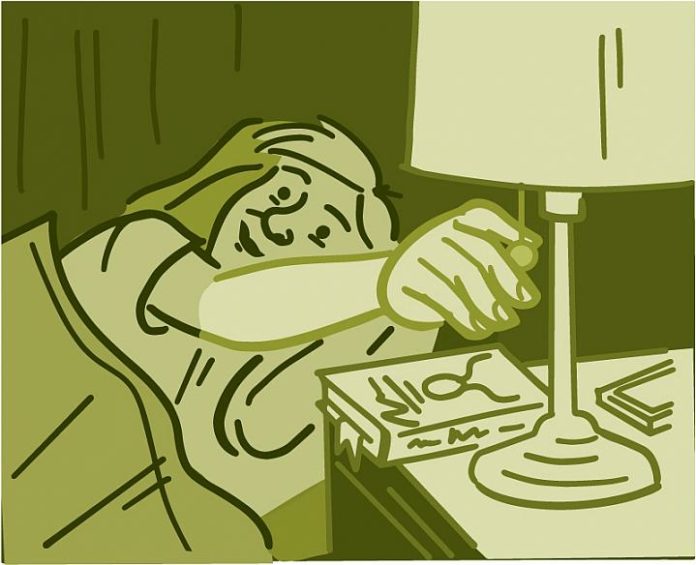
Drawing of person shutting off lamp
Credit National Institutes of Health

Understanding why your brain needs you to get enough sleep

National Institutes of Health

But sleep is as important for good health as diet and exercise. Good sleep improves your brain performance, mood, and health.

Ad Title
ARTICLE INLINE AD

New insights on how saturated fats hurt your health

Photo of Wall Clocks
Out of sync. Clocks via www.shutterstock.com.

Saturated fats make some cells lose track of time — and that’s bad

David J. Earnest, Texas A&M University

Foods high in fat, especially saturated fat, are bad for you. A high-fat diet is a risk factor for cardiovascular disease as well as metabolic disorders like obesity and type 2 diabetes. So why does saturated fat have these effects on the body? What’s going on in your body when you eat a fatty meal?

Ad Title
ARTICLE INLINE AD

Sea level rise is killing trees along the U.S. Atlantic coast

Photo of trees damaged by salt water
Ghost forest panorama in coastal North Carolina. Emily Ury, CC BY-ND

Sea level rise is killing trees along the Atlantic coast, creating ‘ghost forests’ that are visible from space

Emily Ury, Duke University

Trekking out to my research sites near North Carolina’s Alligator River National Wildlife Refuge, I slog through knee-deep water on a section of trail that is completely submerged. Permanent flooding has become commonplace on this low-lying peninsula, nestled behind North Carolina’s Outer Banks. The trees growing in the water are small and stunted. Many are dead.

Ad Title
ARTICLE INLINE AD

Time to upgrade Americas energy distribution technology

Photo of wind turbines
The Los Angeles Department of Water and Power’s Pine Tree Wind Farm and Solar Power Plant in Tehachapi, Calif., 115 miles from LA. Irfan Khan / Los Angeles Times via Getty Images

The US needs a macrogrid to move electricity from areas that make it to areas that need it

James D. McCalley, Iowa State University

Many kinds of extreme events can disrupt electricity service, including hurricanes, earthquakes, floods, wildfires, extreme heat, extreme cold and extended droughts. Major disasters can leave thousands of people in the dark. The Texas deep freeze in February knocked out 40% of the state’s electric generating capacity.

Ad Title
ARTICLE INLINE AD

Ad Box1

Custom Ad 1
Cutsom Ad 1 Ad