Home Blog Page 25

How to reboot the global food economy

Photo of healthy and an healthy food
Shutterstock.com

Five ways to reboot the global food economy to make it healthier for all

Corinna Hawkes, City, University of London

COVID-19 has shown how damaging ill-health can be for the economy. But it has also shown how measures that benefit health (lockdowns) can be seen as bad economic prosperity. A similar paradox is at the heart of promoting better diets.

Ad Title
ARTICLE INLINE AD

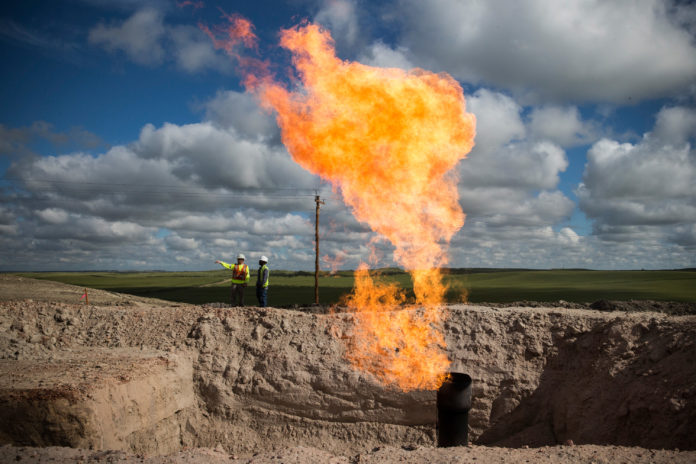
Routine gas flaring is a problem

Photo of gas flare fire
Flaring gas at an oil production site outside Williston, North Dakota. Andrew Burton/Getty Images

Routine gas flaring is wasteful, polluting and undermeasured

Gunnar W. Schade, Texas A&M University

If you’ve driven through an area where companies extract oil and gas from shale formations, you’ve probably seen flames dancing at the tops of vertical pipes. That’s flaring – the mostly uncontrolled practice of burning off a byproduct of oil and gas production. Over the past 10 years, the U.S. shale oil and gas boom has made this country one of the world’s top five flaring nations, just behind Russia, Iran and Iraq.

Ad Title
ARTICLE INLINE AD

NASA heading back to Mars

Photo of the Perseverance
In a clean room at NASA’s Jet Propulsion Laboratory in Pasadena, Calif., engineers observed the first driving test for the Mars rover, Perseverance. Perseverance will search for signs of past microbial life, characterize Mars’ climate and geology, and collect samples for a future return to Earth. NASA/JPL-Caltech

NASA’s big move to search for life on Mars – and to bring rocks home

Briony Horgan, Purdue University and Melissa Rice, Western Washington University

This summer, NASA is taking the next giant leap in the search for signs of life beyond Earth.

On July 30, if the weather in Florida holds, NASA will launch its most sophisticated and ambitious spacecraft to Mars: the aptly named Perseverance rover. This will be the third launch to Mars this month, following the UAE’s Hope and China’s Tianwen-1 spacecraft. Perseverance will look for signatures of ancient life preserved in Mars rocks. And, for the first time, this rover will collect rock samples that will be brought back to Earth, where they can be scrutinized in laboratories for decades to come.

Ad Title
ARTICLE INLINE AD

Coronavirus and children

Photo of child putting on virus mask
Children are at risk of getting sick from coronavirus and need to practice social distancing and mask wearing too. AP Photo/Seth Wenig, File

Yes, kids can get COVID-19 – 3 pediatricians explain what’s known about coronavirus and children

Kathryn Moffett-Bradford, West Virginia University; Martin Weisse, West Virginia University, and Shipra Gupta, West Virginia University

We are three pediatric infectious disease specialists who live and work in West Virginia. The West Virginia University health system serves 400,000 children and according to our internal data, to date, 2,520 children up to 17 years of age have been tested for the coronavirus. Sixty-seven of them tested positive and one became sick enough to be admitted to the hospital.

Ad Title
ARTICLE INLINE AD

UN report projects increased malnutrition

Photo of shoppers in vegetable market
Iraqis buy produce at a street market in Baghdad during the COVID-19 pandemic, July 14, 2020. Ahmad Al-Rubaye/AFP via Getty Images

To reduce world hunger, governments need to think beyond making food cheap

Michael Fakhri, University of Oregon and Ntina Tzouvala, Australian National University

According to a new United Nations report, global rates of hunger and malnutrition are on the rise. The report estimates that in 2019, 690 million people – 8.9% of the world’s population – were undernourished. It predicts that this number will exceed 840 million by 2030.

Ad Title
ARTICLE INLINE AD

Understanding a leading vaccines progress

Photo of scientists working
YurolaitsAlbert / Getty Images

An infectious disease expert explains the results from Moderna’s latest vaccine trials

Sanjay Mishra, Vanderbilt University

Biotech company Moderna, one of many organizations developing a vaccine for COVID-19, published results from an early-stage test of its experimental mRNA vaccine in the New England Journal of Medicine July 14. Vanderbilt University Medical Center staff scientist and protein chemistry expert Sanjay Mishra explains what the results of the phase 1 trial mean.

Ad Title
ARTICLE INLINE AD

Rock dust leads to healthier soil and increased farm yields

Photo of rock formation
Weathering of rocks like these basalt formations in Idaho triggers chemical processes that remove carbon dioxide from the air. Matthew Dillon/Flickr, CC BY

An effective climate change solution may lie in rocks beneath our feet

Benjamin Z. Houlton, University of California, Davis

Why has Earth’s climate remained so stable over geological time? The answer just might rock you. Rocks, particularly the types created by volcanic activity, play a critical role in keeping Earth’s long-term climate stable and cycling carbon dioxide between land, oceans and the atmosphere.

Ad Title
ARTICLE INLINE AD

Real food is medicine

Photo of of fresh food in heart-shaped bowl
Policymakers are responding to a growing recognition of food as medicine. udra11/Shutterstock.com

Real food is medicine: How US policy is shifting toward nutrition for better health

Dariush Mozaffarian, Tufts University; Jerold Mande, Tufts University, and Renata Micha, Tufts University

In this new year, millions of Americans will make resolutions about healthier eating. In 2019, could U.S. government leaders further resolve to improve healthier eating as well, joining public health experts in seeing that food is medicine?

Ad Title
ARTICLE INLINE AD

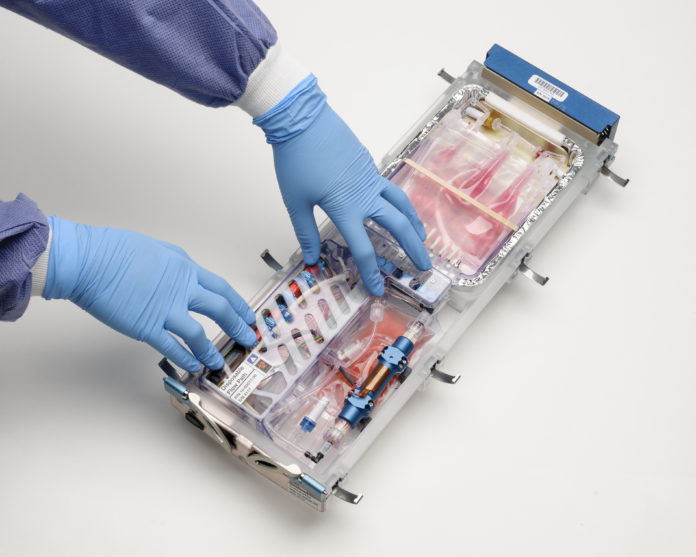
Studying the effects of microgravity on human cell growth.

Photo of technician assembling cell-study equipment
This Bioculture System will let biologists learn about how space impacts human health by studying cells grown in the microgravity environment of the International Space Station. NASA/Ames Research Center/Dominic Hart

Why are scientists trying to manufacture organs in space?

Alysson R. Muotri, University of California San Diego

Gravity can be a real downer when you are trying to grow organs. That’s why experiments in space are so valuable. They have revealed a new perspective into biological sciences, including insights into making human tissues.

Ad Title
ARTICLE INLINE AD

Touching asteroid Ryugu

Photo of asteroid
Asteroid Ryugu photographed from a distance of about 12 miles (20 kilometers) looks just gray and bland, but a close-up provides more color. JAXA, University of Tokyo, Kochi University, Rikkyo University, Nagoya University, Chiba Institute of Technology, Meiji University, University of Aizu and AIST, CC BY-SA

Touching the asteroid Ryugu revealed secrets of its surface and changing orbit

Paul K. Byrne, North Carolina State University

On Feb. 21, 2019, we shot an asteroid.

More precisely, the Hayabusa2 spacecraft, built and operated by the Japan Aerospace Exploration Agency, or JAXA, fired a 5-gram metal projectile into the surface of the near-Earth asteroid Ryugu, a spinning-top-shaped body about 1 kilometer across and some 350 million kilometers from Earth. This projectile disrupted the surface of the asteroid, allowing Hayabusa2 to capture some of the lofted material and tuck it safely away on board. Having departed from Ryugu in November 2019, Hayabusa2 is expected to fly past Earth in late 2020 and release its samples in a reentry capsule for detailed analyses in labs across the world.

Ad Title
ARTICLE INLINE AD

Ad Box1

Custom Ad 1
Cutsom Ad 1 Ad